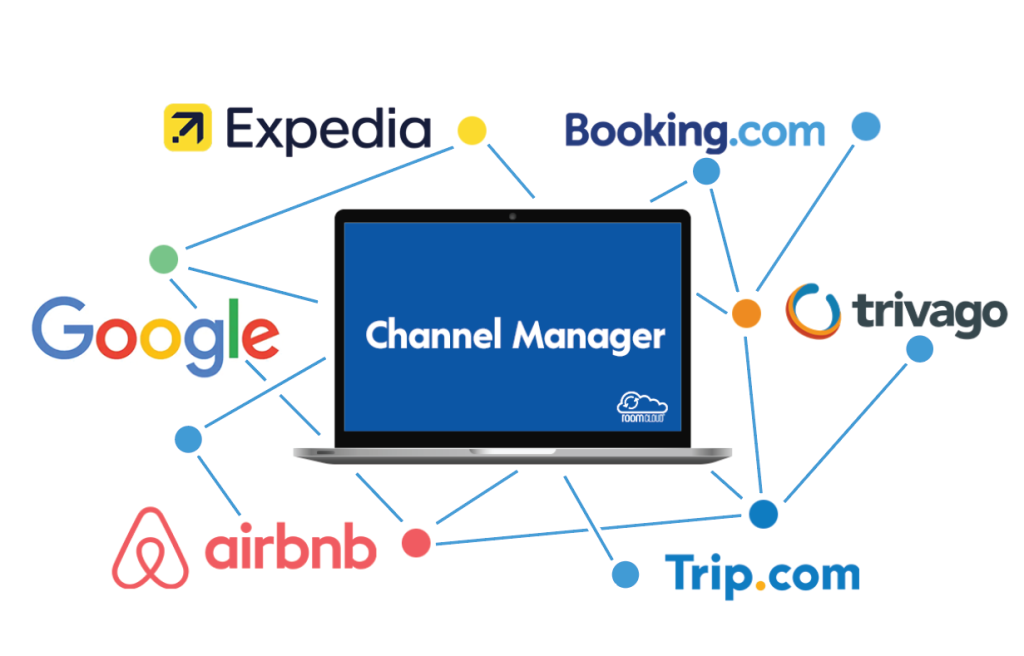

Booking Engine and Channel Manager are not the same thing. While both are used by hotels, B&B, vacation rentals, and other accommodations to manage online bookings, they perform different functions.
In a very simple way:
- a Booking Engine allows guests to make a Direct booking from the property’s website;
- a Channel Manager It is mainly used to Synchronize availability, rates and reservations between different sales channels, such as Booking.com, Airbnb, Expedia, and other OTAs.
They are therefore different and, in many situations, complementary tools.
But is it necessary to use both? Not always.
In this guide we see in detail the differences between Booking Engine and Channel Manager, how they work and which solution may be best suited based on the type and size of the structure.
What is a Booking Engine?
A Booking Engine, also called Booking Engine, is a software that allows users to check availability and rates and complete a reservation directly through the website of an accommodation facility.
It is therefore the tool that transforms the website of a hotel, B&B or holiday home into a real Direct booking channel.
A booking engine can normally allow the guest to:
- select the check-in and check-out dates;
- check availability;
- choose a room or a structure;
- indicate the number of guests;
- view the price of the stay;
- apply any promotions or discounts;
- add extra services;
- send a booking request;
- make an online payment, if necessary.
The fundamental concept is therefore simple:
The Booking Engine works mainly on the official website of the structure and allows you to receive direct bookings.
A booking engine is in fact described as the software through which the user can search for availability and start or complete an online booking.
What is a Channel Manager?
A Channel Manager instead, it is software designed to manage and synchronize the different channels through which a property sells rooms or accommodations online.
For example, a structure might be present on the following at the same time:
- Booking.com;
- Airbnb;
- Expedia;
- Vrbo;
- other OTAs;
- official website.
Manually managing availability on each platform can get tricky.
Let’s imagine that a room is booked on Booking.com.
Without a synchronization system, the manager would have to manually log in to Airbnb, Expedia and other portals to close those same dates.
The Channel Manager automates much of this process.
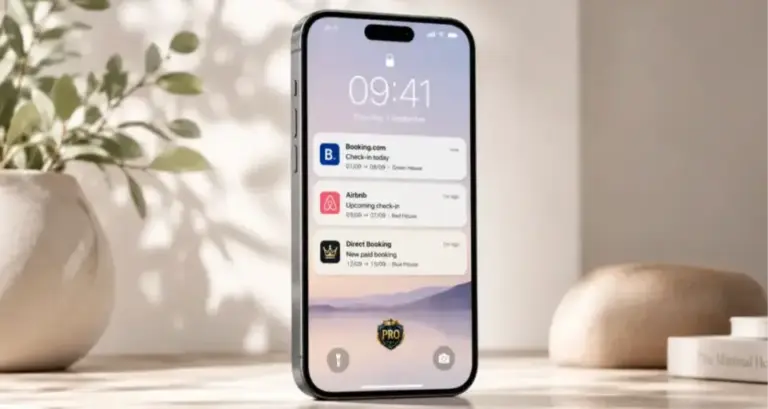
When you receive a booking through a connected channel, you can update availability on the other channels and, depending on the available integrations, also sync information such as rates, restrictions, changes and cancellations.
The main function of a Channel Manager is therefore Centralize the distribution of availability across the different online sales channels.
Booking Engine vs Channel Manager: What’s the Difference?
The main difference can be summed up in one sentence:
The Booking Engine is used to generate direct bookings from your site; the Channel Manager is used to manage and synchronize external sales channels.
Here’s the comparison:
| Function | Booking Engine | Channel Manager |
|---|---|---|
| Reservations from the site | ✅ Yes | Generally no |
| Availability management | ✅ Yes | ✅ Yes |
| Connecting to OTAs | Possible through synchronizations | ✅ Main Function |
| OTA Rate Update | Generally no | ✅ Yes, if supported |
| Online payments | Often yes | Not the main function |
| Direct bookings | ✅ Yes | Not the main function |
| Multiple OTA management | Limited or via calendars | ✅ Yes |
| Reduced reliance on OTAs | ✅ Yes | Indirectly |
| Central synchronization | Possible in some solutions | ✅ Yes |
It is therefore wrong to consider Booking Engine and Channel Manager as two necessarily alternative products.
In the hotel ecosystem, the following are generally considered complementary tools: the booking engine manages the direct channel, while the channel manager manages the distribution on external channels.
Let’s take a practical example
Let’s say you run a vacation rental called Casa Roma.
The structure is present on:
- Airbnb;
- Booking.com;
- official website.
With a Booking Engine
A user visits the Casa Roma website.
Inserts:
10 September → 13 September
The Booking Engine verifies that the accommodation is available, shows the price and allows the user to make the reservation directly.
This is a Direct booking.
With a Channel Manager
Another user books Casa Roma on Booking.com from:
20 September → 23 September
The Channel Manager receives the update and changes the availability on the other connected channels, preventing the same dates from continuing to be sold elsewhere.
The Channel Manager was therefore not created mainly to collect the booking from the site: it was created to coordinate inventory distribution across different channels.
Booking Engine and Channel Manager can work together?
Yes.
In fact, in facilities that use many sales channels, this is a very common setup.
The flow can be:
Website → Booking Engine → booking
and at the same time:
Booking.com / Airbnb / Expedia → Channel Manager → centralized availability
When the systems are integrated, a direct booking received through the Booking Engine can update the central system and result in the same dates being closed on external channels.
Similarly, a booking received from an OTA can make those dates no longer available on the Booking Engine.
The result is much more automated inventory management.
Do you always need a Channel Manager?
No.
And it is probably one of the most important aspects to understand.
A Channel Manager is extremely useful when a property sells on numerous platforms at the same time or manages many rooms or properties.
For a small facility, however, it may not be necessary to start immediately with such an infrastructure.
A Channel Manager can be useful if:
- you manage many rooms or apartments;
- work with numerous OTAs;
- changes prices and restrictions frequently;
- you have a high volume of bookings;
- you want to centralize a large part of distribution;
- you want to minimize manual work on OTA extranets.
A Booking Engine may be sufficient if:
- manage one or a few facilities;
- you mainly want to receive bookings from your site;
- you use few OTAs;
- you have relatively simple management;
- you can synchronize availabilities through external calendars;
- You don’t need to automatically distribute rates and restrictions across numerous portals.
The choice must therefore depend on the Facility operating model, not simply by the fact that one software is more complete than the other.
Booking Engine with iCal synchronization: can it replace a Channel Manager?
In some situations, it may be an easier alternative, but it’s important to understand the differences.
Many short-term rental platforms allow you to import and export calendars through the format iCal/ICS.
Through these links it is possible, for example:
- export the reservations on your website;
- import them to Airbnb or Booking.com;
- import bookings received from OTAs on the website;
- automatically block dates that are already occupied.
This solution can be of interest especially for hosts and small facilities with few accommodations and few channels.
The iCal synchronization, however, is not technically equivalent to a real Channel Manager.
A Channel Manager can handle much more complex elements, such as:
- rates;
- availability;
- restrictions;
- pricing plans;
- changes to reservations;
- distribution on numerous channels.
iCal synchronization is primarily about the calendar and can also have update times that depend on the platforms involved. Some synchronization services highlight that iCal feeds should not necessarily be considered instantaneous.
For this reason, as the number of properties, channels and booking volume increases, a Channel Manager can become a more appropriate solution.
Booking Engine or Channel Manager for a vacation rental?
For a single vacation rental, the priority may be different than for a fifty-room hotel.
A host who has one or two apartments may mainly need:
- receive reservations from your website;
- show available dates;
- sync Airbnb and Booking.com;
- automatically block busy dates;
- receive payments or booking requests.
In such a scenario, a Booking Engine with calendar synchronization It can be a relatively simple solution.
If, on the other hand, the same manager grows to administer numerous apartments on different OTAs, it becomes much more important to centralize inventory, rates and distribution.
In that case, the Channel Manager acquires a much greater role.
Booking Engine or Channel Manager for a hotel?
For a hotel, the situation can be more complex.
The more they increase:
- number of rooms;
- room types;
- pricing plans;
- offers;
- restrictions;
- distribution channels;
the more difficult manual management becomes.
In this context, Booking Engine and Channel Manager are often used at the same time.
The Booking Engine allows the hotel to develop its own direct channel.
The Channel Manager instead, it manages the distribution of rooms through OTAs.
And the PMS?
Then there is a third software that is often confused with both: the PMS, an acronym for Property Management System.
In very simplified terms:
PMS → operational management of the facility
Channel Manager → channel distribution
Booking Engine → direct bookings
A PMS can manage, depending on the product:
- reservations;
- rooms;
- guests;
- check-in and check-out;
- reception operations;
- housekeeping;
- documents;
- reporting.
Many modern platforms integrate more than one of these functions within the same software. For this reason, the boundaries may seem less obvious, but from a conceptual point of view they are three different tools.
Which one to choose?
There is no one-size-fits-all answer.
Mainly choose a Booking Engine if…
Your goal is Increase direct bookings through the website and create a proprietary channel through which guests can consult availability and book.
Evaluate a Channel Manager if…
You manage different sales channels and need centralize availability, rates and distribution on OTAs.
Use both if…
You receive a significant volume of bookings both from the official website and through different portals and want to automate distribution as much as possible.
Booking Engine vs Channel Manager: Conclusion
The difference between Booking Engine and Channel Manager is therefore much simpler than it may seem:
the Booking Engine sells directly on your site, while the Channel Manager coordinates sales through different channels.
You don’t necessarily have to choose one over the other.
For a small structure, it may be sufficient to start with a Booking Engine connected to major OTA calendars, maintaining a simple management oriented towards direct bookings.
When the number of properties, rooms, channels and operational complexity increases, it can become convenient to integrate a real Channel Manager as well.
The best solution is therefore the one proportionate to the real needs of the structure.
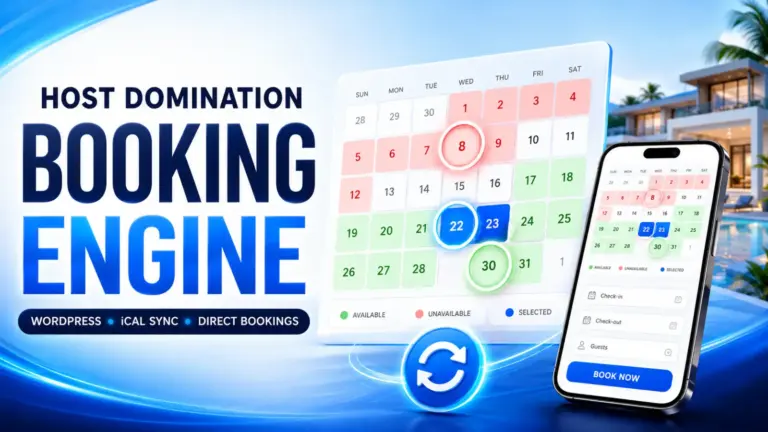
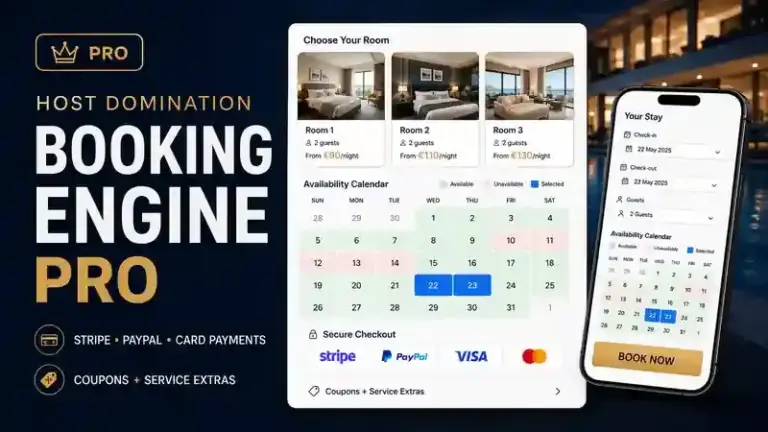
If your main goal is receive bookings directly from your WordPress site and synchronize availability with your OTA calendars, you can also rate Host Domination Booking Engine, designed to allow hosts and accommodation facilities to create a booking system directly within their website.
Frequently Asked Questions
Booking Engine and Channel Manager are the same?
No. The Booking Engine mainly allows you to receive reservations from the official website of the facility, while the Channel Manager synchronizes and distributes availability and other information on the different sales channels.
Can I use a Booking Engine without Channel Manager?
Yes. For facilities with relatively simple management and few channels, it may be possible to use only one Booking Engine, possibly combined with calendar synchronization.
Can I use a Channel Manager without Booking Engine?
Yes, but in this case you could effectively manage OTAs without necessarily having a system through which users can complete a booking directly from your site.
Can a Booking Engine sync with Airbnb and Booking.com?
It depends on the software you use. Some Booking Engine allow you to import and export iCal/ICS calendars or use more advanced integrations.
Is iCal the same as a Channel Manager?
No. iCal is primarily used to exchange information regarding busy or available dates. A Channel Manager can also synchronize rates, restrictions, and other information, and generally has more advanced integrations.
When should I switch to a Channel Manager?
It can become useful when the number of rooms or properties, OTAs used, booking volume, and the complexity of rates and restrictions increase.